
How should distilled water be stored?
Distilled water is water that has been purified by boiling and condensing the steam, which removes minerals and most impurities. Distilled water is commonly used for appliances, laboratory work, car batteries, steam irons, humidifiers, aquariums, and some medical devices such as CPAP machines. Because it is very low in dissolved minerals, it is often chosen when people want consistent water quality and reduced limescale. Correct storage matters because distilled water can very easily pick up contaminants after it has been produced, and it can take on tastes and odours from its surroundings if it is not handled well.
Storing distilled water is not complicated, but it does require attention to the container, cleanliness, temperature, light exposure, and how often the container is opened. The goal is to keep the water as close as possible to its original purity until the moment it is used.
Choose the right container
The container is the most important storage decision because distilled water can absorb trace substances from surfaces over time. A suitable container should be clean, food-safe, and made from a material that does not easily transfer flavours, odours, or chemicals into the water.
High-quality plastic containers such as our food-grade HDPE bottles and drums are widely used for distilled water because they are lightweight and resistant to shattering.
Glass is an excellent option for smaller quantities because it is generally non-reactive and does not hold odours. Amber or dark glass can be helpful if the water will be exposed to light, although a cupboard is usually enough. Glass is heavier and breakable, so it is best when the container will not be moved frequently.
Stainless steel containers can be suitable, particularly for short-term storage and transport, but they should be designed for storing water and should be thoroughly cleaned. Containers made for other purposes may have seams, linings, or internal finishes that are not ideal for maintaining purity. Aluminium containers are not recommended because they can react with water in certain conditions and are more likely to affect taste.
Keep the lid sealed and minimise opening
Distilled water stays cleanest when it remains sealed. Each time a container is opened, airborne particles and microbes can enter, and the inner surfaces can be touched accidentally. Repeated opening also increases the chance of introducing contamination from funnels, scoops, or bottles that are not fully clean.
If you need to use distilled water regularly, it is often better to store it in multiple smaller containers rather than one large container that is opened daily. This approach reduces exposure and helps preserve the quality of the unopened portions. It also reduces the chance that a single contamination event affects your entire supply.
Caps should be screwed on firmly and stored upright. An upright position reduces the contact area between water and the cap, which is helpful because caps can hold odours or residues more easily than the main bottle.
Store in a cool, stable location
Temperature affects both the container and the water’s tendency to pick up odours. Distilled water should be kept in a cool, dry place where temperatures do not swing dramatically. A cupboard, pantry, or utility room shelf is usually suitable. A stable indoor environment is generally better than a garage or shed, where temperatures can vary and where the air may contain fuels, solvents, paints, or other chemicals that could be absorbed as odours.
Avoid storing distilled water next to radiators, boilers, hot pipes, tumble dryers, or direct heat sources.
Protect it from sunlight and strong smells
Direct sunlight is not ideal for stored water. Light exposure can warm the container and may encourage algae growth if any contamination occurs, especially in clear containers. Distilled water itself does not contain nutrients that support growth, but contamination can introduce them. Storing bottles in a dark cupboard or opaque storage box is a straightforward way to reduce this risk.
Distilled water can also absorb odours from the environment, particularly when stored in plastic. Keep it away from petrol, diesel, paint, varnish, cleaning chemicals, scented detergents, air fresheners, and anything with a strong smell. Even if the lid is closed, odours can linger around caps and external surfaces, and plastic can take on smells that later transfer to the water when poured.
Keep containers and tools clean
Cleanliness is essential when refilling or decanting distilled water. If you pour water into smaller bottles, use containers that have been washed thoroughly and rinsed well. Any soap residue can affect the taste and may interfere with certain applications, such as laboratory work, humidifiers, and steam irons.
Use a clean funnel and allow it to dry completely before use. Damp funnels stored in cupboards can collect dust and microbes. If you use a jug to measure, keep it dedicated to water and do not use it for other liquids. Cross-contamination is one of the most common ways distilled water loses its purity at home.
Do not dip hands, cloths, or unclean utensils into stored water. Pouring is better than scooping, and a tap dispenser that is designed for water storage can be helpful if it is kept clean and used correctly.
Understand shelf life and practical timeframes
Distilled water does not spoil in the way that milk or juice spoils, but it can become less suitable for certain uses if it is contaminated or if it absorbs odours and trace substances such as carbon dioxide from the atmosphere. Shelf life is therefore less about the water 'going off' and more about how well the water’s original purity is preserved.
If distilled water is factory-sealed and stored in a cool, dark place, it can remain suitable for a long time - up to 12 months. Once opened, the practical storage time depends on how it is handled. Water that is opened frequently or decanted with non-sterile equipment should be used sooner. Water that is opened occasionally, poured carefully, and resealed promptly will generally remain suitable for longer.
For sensitive applications, such as laboratory work, medical devices, or situations where mineral-free water quality is critical, it is sensible to use distilled water relatively soon after opening and to avoid topping up old containers with new water. For less sensitive uses, such as topping up a steam iron, the water can remain usable for a longer period provided it remains clean and odour-free.
Watch for signs that storage has gone wrong
Stored distilled water should look clear and should not have floating particles, cloudiness, or a noticeable odour. If you see sediment, slime, or discolouration, the water has likely been contaminated or the container has degraded. If the water smells of plastic, chemicals, or a musty cupboard, it may still work for some non-critical uses, but it is not ideal and should not be used where purity is important.
Also inspect the container itself. If a plastic bottle becomes soft, warped, cracked, or develops a persistent smell, replace it. If the cap seal looks damaged, do not rely on it for long-term storage.
Special considerations for common uses
Distilled water is often stored near the item it will be used with, but location can be a problem. For example, a garage shelf might be convenient for car batteries, but garages commonly contain fumes and chemicals. In that scenario, a sealed container stored indoors is usually a better choice, with only a small working bottle taken to the garage when needed.
For humidifiers and CPAP-type devices, contamination control matters because water can sit warm in reservoirs, which encourages microbial growth. Storing distilled water carefully reduces what enters the device, but the device reservoir still needs routine cleaning and drying. Only pour what you need, keep the main bottle sealed, and avoid letting the water bottle mouth touch the device opening.
For steam irons, distilled water should be kept away from fragranced laundry products and cleaning sprays stored in utility rooms. A dedicated cupboard shelf and a clean pouring funnel reduce the chance of introducing residues that may later spray or stain fabrics.
Best practice checklist for storage
A good routine is straightforward. You should store distilled water in a clean, food-safe container with a tight cap. You should keep it upright, sealed, cool, and out of sunlight. You should keep it away from strong smells and chemicals. You should pour rather than scoop, and you should use clean, dry tools if you decant into smaller bottles. You should use smaller containers if you open them frequently. You should discard water that becomes cloudy, develops particles, or takes on an unusual smell.
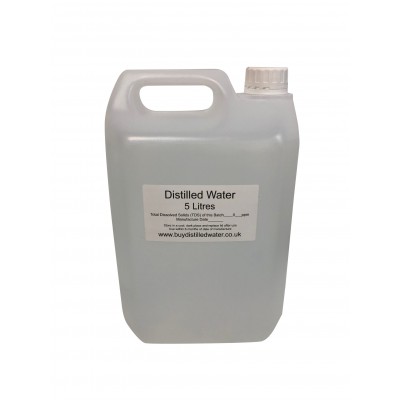
Pure, Distilled Water - Now Available in 5 Litre Containers
From £6.45 ex. VAT.
IN STOCK NOW! Our 5 litre Distilled Water drum is economical, yet easy to carry and pour. Our 5 litre bottles have an integral handle and are designed to be easy to transport and store. The larger size makes them perfect for larger applications, while still being light enough to carry.
Our 5 litre drum is the convenient, great‑value size for regular users who still want easy handling and storage. Every batch is steam‑distilled, polished through mixed‑bed resins and UV‑treated, then bottled in brand‑new, food‑grade HDPE with a tamper‑evident screw cap. We’ve specialised in distillation since 2008, with daily EC/TDS checks and periodic UKAS‑accredited lab analysis.
Each of our 5 litre distilled water bottles is equipped with a tamper-evident screw cap, making it easy to tell if the bottle has been opened. These food-grade HDPE containers are certified BPA-free.
Distilled water is the purest form of water available. Unlike filtered water, distilled water goes through a 6-stage process that removes impurities, sediment and minerals. As a result, it's far purer than any other type of water.
Uses & applications
Ideal wherever low‑conductivity, mineral‑free water prevents deposits or interference:
- CPAP machines and home humidifiers
- Steam irons and garment steamers
- Lead‑acid car batteries and coolant top‑ups
- Autoclaves, sterilisers and lab glassware rinsing
- Cosmetics blending and printing/photography
- Optics and electronics cleaning/setup
- Houseplants (e.g., orchids, carnivorous plants)
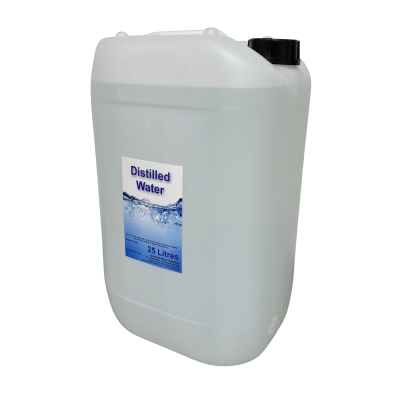
From £20.95 ex. VAT.
IN STOCK NOW! Our 25 litre Distilled Water drum is the most economical way to buy ultra pure distilled water from us. Perfect for jobs requiring large volumes such as research laboratories and industrial processes. The drum is made from food-grade HDPE and comes complete with a tamper-evident screw cap. For additional savings on larger orders, we can send the drums on a pallet to reduce packaging and delivery charges - Palletised delivery is available on quantities from 9 drums (see below).
Buy 25 litre drums of distilled water directly from the manufacturer. We use our own proprietary 6-step method to ensure our water is of the highest quality and it undergoes UV sterilisation prior to bottling to further reduce potential bacteria. Our water is 100% steam distilled, not just filtered, deionised, or reverse osmosis water. After you buy distilled water from us, keep the drum sealed and away from sunlight, storing it between 15-25°c.
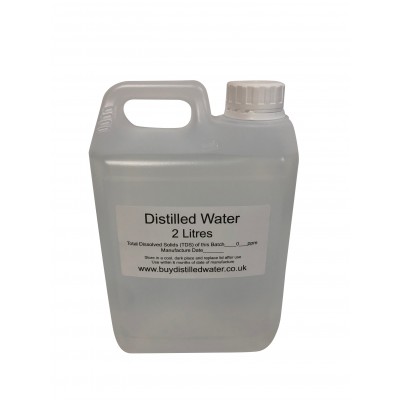
From £4.45 ex. VAT.
IN STOCK NOW! Our 2 litre Distilled Water bottle is more economical than our 1 litre bottles, but still very easy to carry and pour. It comes complete with a tamper-evident screw cap